Office or business premises: which suits you?
The differences between offices, business premises and flex space, and what to consider when choosing.
Last checked: 16 November 2026. Rules and rates change; always check them with the official source.
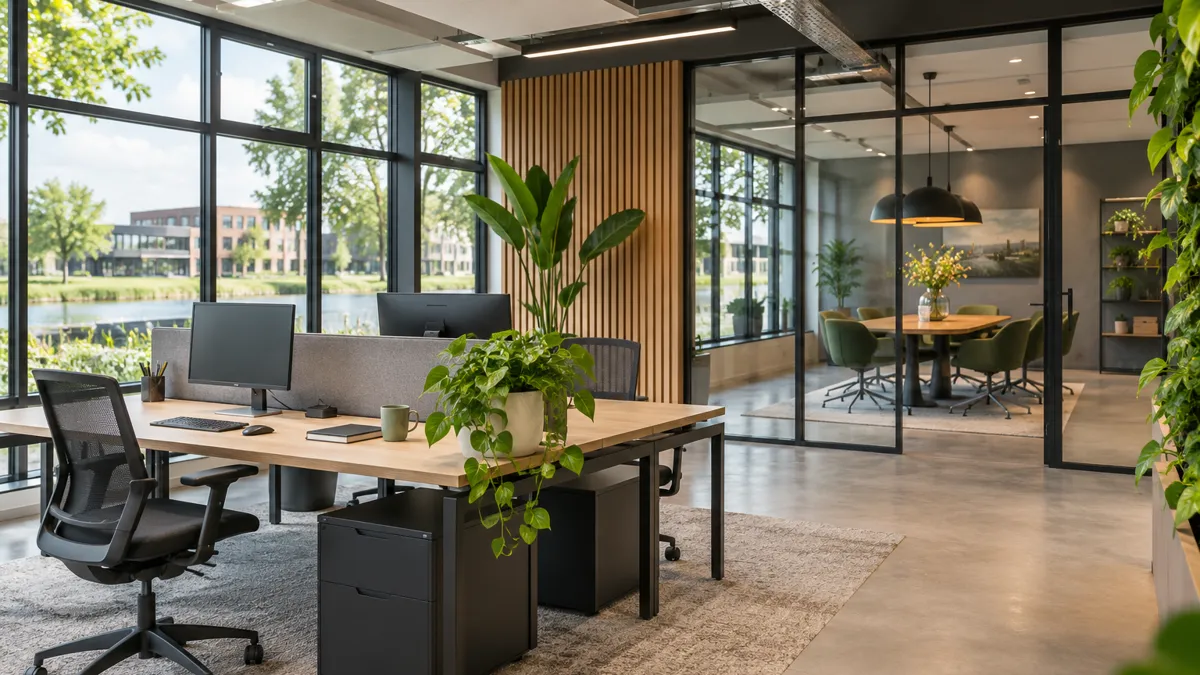
Offices
Space for workstations and meetings. Look at accessibility, the parking standard and facilities. In principle an office building in the Netherlands must have at least energy label C. This is set out in the Besluit bouwwerken leefomgeving (Buildings Decree) and is enforced by municipalities and regional environmental agencies. There are exceptions, for example when less than half of the usable floor area has an office function. Read the exceptions on the RVO page. Energy label A in 2030 is not a legal requirement for offices.
Business premises
Space for production, storage or logistics. Look at floor load, height, loading docks, access for trucks and the zoning under the zoning plan.
Combinations and flex
A business centre or flex space combines smaller units with shared facilities. That can be handy with a short term or fast growth.
Why it matters legally
Space open to the public with direct supply to the public (shop, restaurant) falls under article 7:290 BW and has extra tenant protection. Offices, factories and warehouses usually fall under article 7:230a BW with more freedom of contract. Read more in the guide on the ROZ lease agreement.
How to choose
Start with your activities and expected growth. Then compare properties on total monthly costs, term and flexibility.
Use the calculators or put two properties side by side under compare properties.
Sources
- RVO: Energy label C for offices (Dutch)
- Wetten.overheid.nl: Dutch Civil Code Book 7 (Dutch)
- Ruimtelijkeplannen.nl: zoning plans (Dutch)
This is general information and not legal, tax or financial advice. Official sources are mostly in Dutch.